
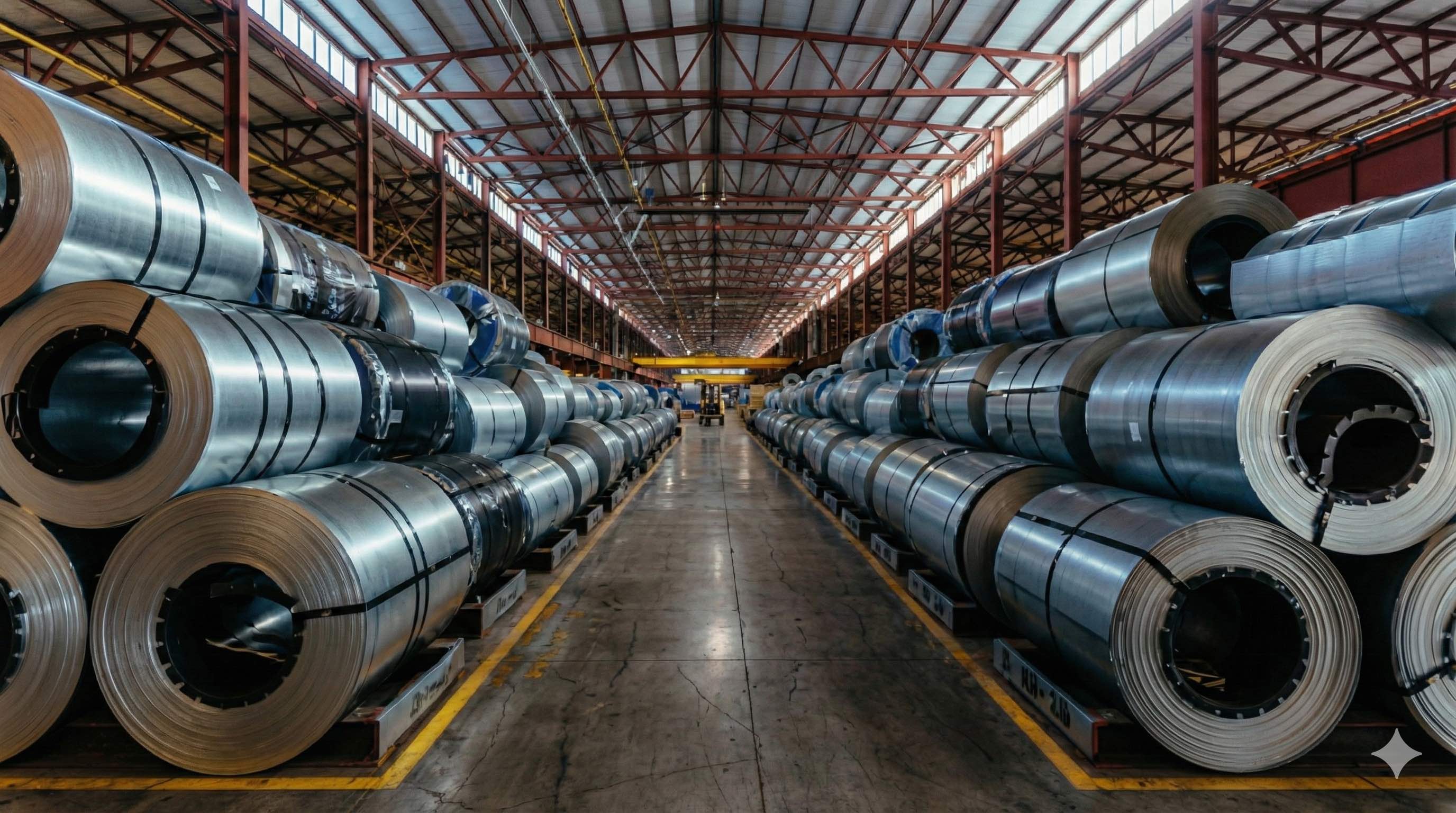
ASTM A516 is the American Society for Testing and Materials specification for carbon steel plates used in pressure vessels and storage tanks operating at moderate to low temperatures. Grade 70 is the most widely used worldwide, offering a balance of strength, toughness, and weldability. It is specified extensively in Oil & Gas, chemical, and petrochemical plant construction globally and is commonly required for export-oriented fabrication projects in India.
Technical Overview
ASTM A516 defines four grades — 55, 60, 65, and 70 — where the number denotes minimum tensile strength in ksi (thousands of psi). Grade 70 (tensile 485–620 MPa) is by far the most traded. The standard mandates normalised condition for plates above specified thicknesses, controls sulphur and phosphorus to low levels, and requires Charpy V-notch impact testing at 0°C (or lower if specified). ASTM A516 material is traceable by heat number, plate number, and certified mill test report. In India, ASTM A516 material is imported or sourced from mills that carry dual certification — ASTM A516 / IS 2041 — allowing use in both ASME-code and BIS-code vessels.
Grades & Mechanical Properties
| Grade | Yield Strength (MPa) | Tensile Strength (MPa) | Notes |
|---|---|---|---|
| Grade 55 | ≥ 205 MPa | 380–515 MPa | Lowest strength — thin-wall vessels, low-pressure service |
| Grade 60 | ≥ 220 MPa | 415–550 MPa | Common medium-grade — storage tanks, heat exchangers |
| Grade 65 | ≥ 240 MPa | 450–585 MPa | Higher strength — compact pressure vessel designs |
| Grade 70 | ≥ 260 MPa | 485–620 MPa | Most widely specified — reactors, bullets, columns |
Values are minimum requirements unless otherwise stated. Always verify with the current edition of the standard and the mill test certificate.
Common Applications
- Pressure vessels in petrochemical and refinery plants
- LPG bullets and propane/butane storage spheres
- Heat exchangers for process industry
- Storage tanks for crude oil, chemicals, and LNG
- Boiler drums and steam drums
- Offshore topside pressure equipment
International Equivalents
IS 2041 R260 / R310
Indian equivalent for moderate-temperature pressure vessel plate
EN 10028-2 P265GH / P295GH
European pressure vessel steel grades for elevated temperature
JIS G3115 SPV315 / SPV355
Japanese pressure vessel steel — comparable strength range
Frequently Asked Questions
What is ASTM A516 Grade 70?
What is the Indian equivalent of ASTM A516 Grade 70?
Does ASTM A516 require normalising?
Is ASTM A516 Grade 70 weldable?
Related Standards
IS 2041:2009 — Steel Plates for Pressure Vessels Used at Moderate and Low Temperatures
IS 2041:2009 specifies steel plates for fabricating pressure vessels, storage tanks, heat exchangers, and process equipment operating at moderate to sub-zero temperatures. It defines four grades — R220, R260, R310, and R350 — that balance strength, ductility, and notch toughness to ensure safe containment of pressurised fluids and gases in chemical, petrochemical, and industrial plant applications.
View standard
EN 10025-2:2019 — Hot Rolled Products of Structural Steels — Non-Alloy Structural Steels
EN 10025-2:2019 is the European standard for hot rolled non-alloy structural steel, defining grades S235, S275, S355, and S450. It is the European counterpart of IS 2062 and is the primary structural steel specification for European-origin projects. Indian fabricators supplying to Europe, the Middle East, or international EPC contracts frequently require material certified to EN 10025-2 — either imported or from Indian mills with CE mark capability.
View standard
IS 2062:2011 — Hot Rolled Medium and High Tensile Structural Steel
IS 2062 is India's primary structural steel standard, specifying hot rolled medium and high tensile steel used in bridges, buildings, industrial structures, and fabricated assemblies. It defines six grades from E250 to E550, covering mild to high tensile performance. Published by the Bureau of Indian Standards (BIS), it is the most referenced steel specification in Indian construction and engineering.
View standard