
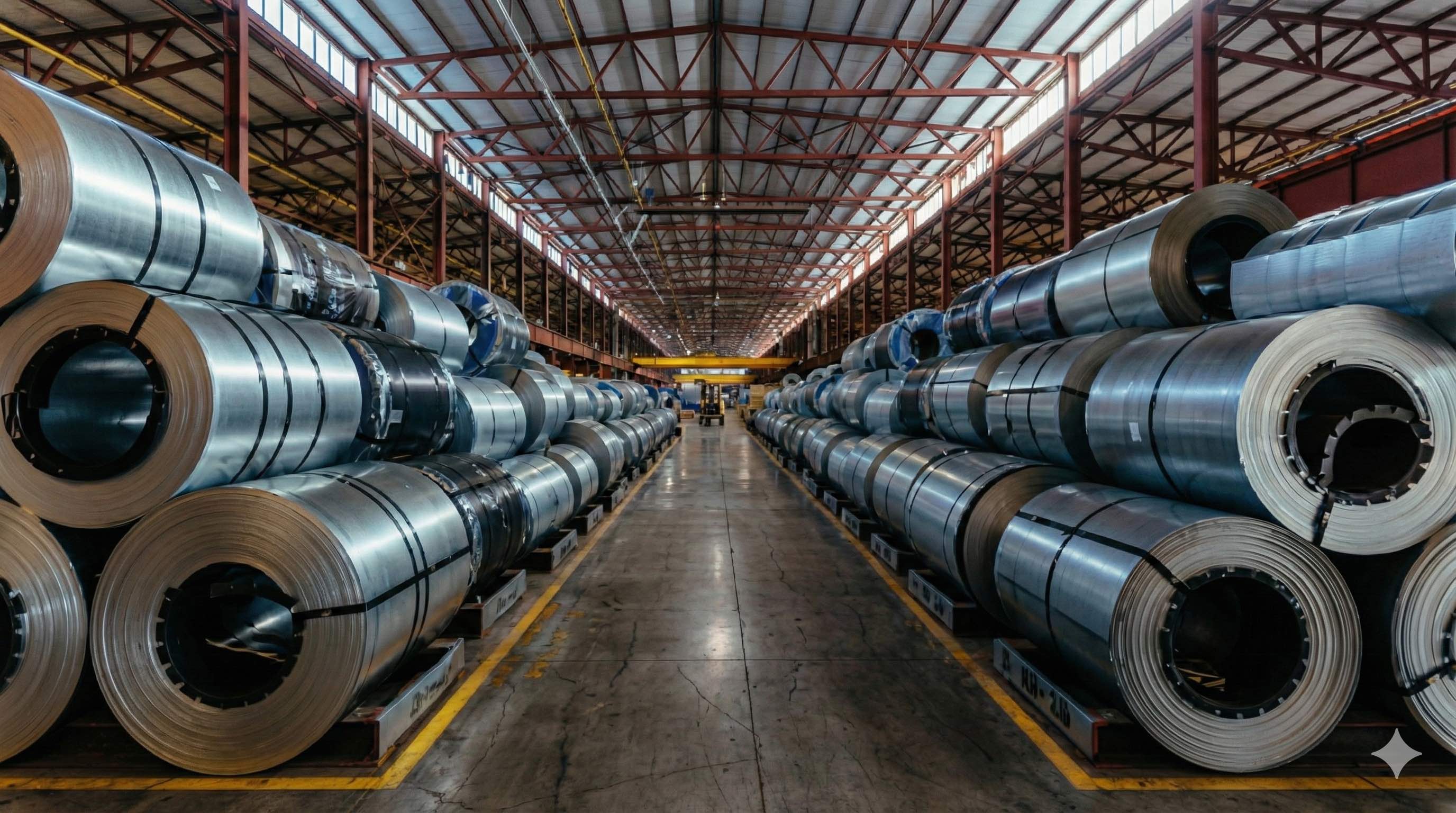
IS 2041:2009 specifies steel plates for fabricating pressure vessels, storage tanks, heat exchangers, and process equipment operating at moderate to sub-zero temperatures. It defines four grades — R220, R260, R310, and R350 — that balance strength, ductility, and notch toughness to ensure safe containment of pressurised fluids and gases in chemical, petrochemical, and industrial plant applications.
Technical Overview
Pressure vessel plates differ from structural plates in that they must meet additional impact (Charpy) requirements at specified test temperatures, ensuring toughness is maintained when vessels operate in cold climates or handle chilled fluids. IS 2041 requires normalised or as-rolled delivery condition, specific heat treatment records, and full traceability to heat number. Plates are subject to ultrasonic testing for internal defects and must pass bend tests. Chemical composition controls sulphur and phosphorus to very low levels to prevent hot cracking in welds. IS 2041 plates are ASME stamp-compatible when used under third-party inspection and are widely used in Indian Oil & Gas and chemical plant fabrication.
Grades & Mechanical Properties
| Grade | Yield Strength (MPa) | Tensile Strength (MPa) | Notes |
|---|---|---|---|
| R220 | ≥ 220 MPa | 350–480 MPa | Low-pressure, ambient-temperature vessels |
| R260 | ≥ 260 MPa | 410–530 MPa | Most common pressure vessel grade — storage tanks, reactors |
| R310 | ≥ 310 MPa | 480–620 MPa | Higher pressure vessels — LPG bullets, process equipment |
| R350 | ≥ 350 MPa | 530–680 MPa | High strength — compact vessel designs, special pressure equipment |
Values are minimum requirements unless otherwise stated. Always verify with the current edition of the standard and the mill test certificate.
Common Applications
- Pressure vessels — reactors, distillation columns, absorbers
- LPG bullets and spherical storage tanks
- Heat exchangers and shell-and-tube units
- Storage tanks for chemicals, oil, and water at pressure
- Boiler drums and pressure parts
- Cryogenic applications at low temperatures
International Equivalents
ASTM A516 Grade 60/70
US pressure vessel plate — R260 broadly comparable to A516 Gr.60
EN 10028-2 P265GH
European pressure vessel steel — similar to R260 for elevated temp service
IS 2002
Indian standard for boiler pressure vessels — allied specification
Frequently Asked Questions
What is IS 2041 pressure vessel steel?
What is the difference between IS 2041 and IS 2062?
What thickness does IS 2041 pressure vessel plate come in?
Related Standards
ASTM A516 / A516M — Standard Specification for Pressure Vessel Plates, Carbon Steel, for Moderate- and Lower-Temperature Service
ASTM A516 is the American Society for Testing and Materials specification for carbon steel plates used in pressure vessels and storage tanks operating at moderate to low temperatures. Grade 70 is the most widely used worldwide, offering a balance of strength, toughness, and weldability. It is specified extensively in Oil & Gas, chemical, and petrochemical plant construction globally and is commonly required for export-oriented fabrication projects in India.
View standard
IS 2062:2011 — Hot Rolled Medium and High Tensile Structural Steel
IS 2062 is India's primary structural steel standard, specifying hot rolled medium and high tensile steel used in bridges, buildings, industrial structures, and fabricated assemblies. It defines six grades from E250 to E550, covering mild to high tensile performance. Published by the Bureau of Indian Standards (BIS), it is the most referenced steel specification in Indian construction and engineering.
View standard
IS 1852:1985 — Rolling and Cutting Tolerances for Hot Rolled Steel Products
IS 1852:1985 is the BIS standard governing rolling and cutting tolerances for all hot rolled steel products — plates, sheets, strips, flats, bars, and structural sections. It specifies the permitted deviation from nominal dimensions for thickness, width, length, flatness, camber, and squareness. IS 1852 is the tolerance reference document used alongside IS 2062 and IS 1079 in purchase orders and inspection protocols — any dimension check at goods receipt references IS 1852.
View standard